How AI can spot menu items that are losing you money
Paste your menu and 30 days of orders into Claude or GPT. It shows which dishes are quietly losing you money.
How AI can spot menu items that are losing you money
Paste your menu and 30 days of orders into Claude or GPT. It shows which dishes are quietly losing you money.
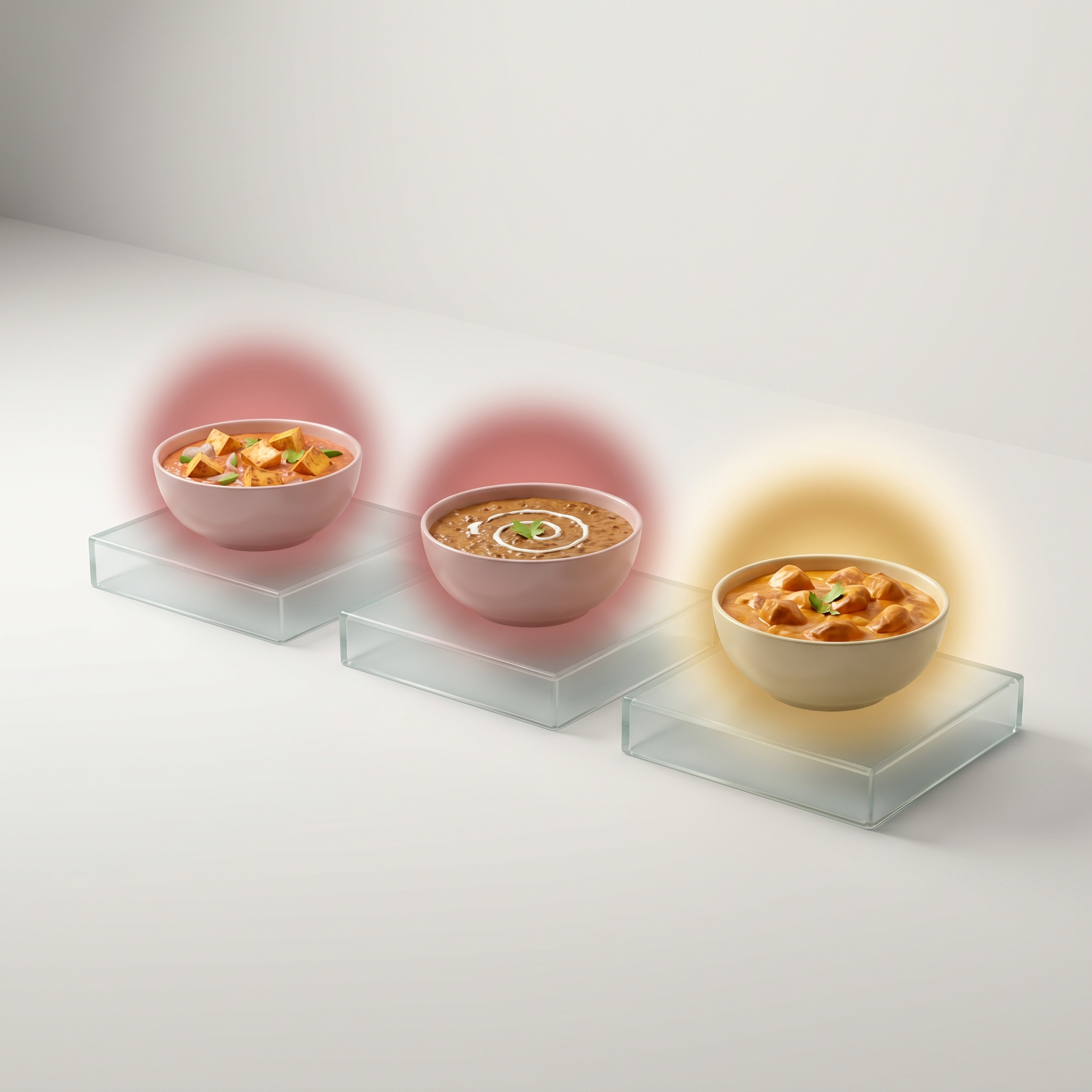
A Pune restaurant owner — let's call him Vikram — was running Paneer Tikka Masala at ₹350. Sold six portions a day, every day. On paper, a winner. But when he finally ran the numbers, his food cost on that dish was ₹240. Margin: 31%. Six portions a day at ₹110 margin each is ₹660 a day. A different dish at the same ₹350 price — with a food cost of ₹150 — would earn ₹1,200 a day on those same six covers. Same real estate on the menu. Same kitchen effort. ₹540 more per day quietly sitting on the table.
He didn't find this himself. He pasted his menu and 30 days of Petpooja order data into Claude and asked the right question.
Which dishes on your menu are quietly losing you money?
Most restaurant menus have three types of problem dishes hiding in plain sight:
Dishes priced too low for what they cost. Your food cost crept up over 18 months — paneer went from ₹32/kg to ₹52/kg — but the menu price didn't move. The dish still sells. It just earns less now.
Dishes priced right but barely selling. High margin, low velocity. Dal Makhani at ₹320 with a 52% margin is excellent — but if it sells four times a day while Butter Chicken sells 40 times, it's not doing the work your menu real estate deserves.
Dishes that compete with each other. Three different paneer gravies, all priced within ₹30 of each other, splitting the same customer intent. They cannibalise each other's velocity. Remove one, promote another, and total paneer revenue often goes up.
AI doesn't know your customers. But it can see all three patterns instantly, if you give it the right data.
What AI can actually see in your menu data — and what it cannot
When you paste your menu CSV and 30-day order export into Claude or GPT with a clear question, here is what it can do well:
- Calculate gross margin per dish — if you've included food cost in your menu CSV (which Petpooja lets you add in the food-costing report), AI can rank every dish by margin %. It flags the bottom quartile for you.
- Cross-reference with velocity — it reads how many times each dish sold in 30 days and places every dish in a 2×2: high-margin/high-velocity (keep, promote), high-margin/low-velocity (promote more), low-margin/high-velocity (price-test or cut), low-margin/low-velocity (drop or redesign).
- Spot pricing anomalies — dishes where the current price implies a margin below 30% get flagged automatically. So do dishes where you haven't updated the price but the category average has shifted.
- Identify cannibalisation patterns — AI can group dishes by type (all paneer gravies, all chicken items) and show you whether adding dish B to a menu correlates with dish A selling less.
What AI cannot do:
- It doesn't know which dishes are your family recipes, which are festival-mandatory (dal baati for Rajasthani clientele on Sundays, modak in September, biryani on Eid), and which keep your regulars coming back every week. That context lives in your head, not in the order file.
- It can't predict how customers will respond to a price increase — it can only show you the gap.
- It will not make the decision for you. The chef and the owner decide. AI just shows where to look.
A real Pune example: the ₹350 dish that earns ₹660 a day when it could earn ₹1,200
Here is the full picture of Vikram's Paneer Tikka Masala situation:
Dish Price Food cost Margin Daily orders Daily profit Paneer Tikka Masala (current) ₹350 ₹240 31% 6 ₹660 Dal Makhani (same outlet) ₹320 ₹140 56% 4 ₹720 Butter Chicken (same outlet) ₹380 ₹165 57% 9 ₹1,935Paneer Tikka Masala is his most-ordered paneer dish. It looks like a winner because it moves. But the food cost — heavy cream, high-grade paneer, expensive spices — means every sixth portion earns him less than one Butter Chicken.
AI spotted this in three seconds. The model compared all dishes by margin × velocity and flagged Paneer Tikka Masala, suggesting: raise the price to ₹395 (adding ₹270/day), or engineer the recipe down by ₹20 on food cost.
The owner decides. But now he's deciding with data instead of instinct.
How to run the scan yourself in 30 minutes this Sunday
You need two files and one question.
Step 1 — Export your menu with food costs. In Petpooja: Reports → Food Costing Report → Export to Excel. If you haven't set up food costing yet, use estimates (₹X per plate). An estimate is enough to find problem dishes.
Step 2 — Export your last 30 days of orders. Petpooja: Reports → Sales → Item Sales Report → last 30 days → Export CSV. This gives you dish name and quantity sold per day.
Step 3 — Paste both files into Claude or GPT with this question:
"Here is my restaurant menu with food costs, and here are my last 30 days of item sales. Please: 1. Calculate margin % for each dish. 2. Rank all dishes by (margin %) × (monthly orders) — highest first. 3. Flag any dish where margin is below 35%. 4. Identify any dish category (e.g. paneer dishes, chicken dishes) where two dishes are splitting the same customer intent. Tell me the top 3 dishes I should either reprice or reconsider."
The model will give you a ranked table and a list of flags. The whole process — export, paste, read output — is about 25 minutes. The remaining 5 minutes are for deciding which flags to act on first.
What to do with what AI finds — and what only you can decide
The output is a starting point, not a verdict.
If AI flags your Dal Makhani as low-velocity, it doesn't know that Dal Makhani is your head chef's signature dish — the one that got you a write-up in a local food blog four years ago and still brings in three or four tables a month who specifically want it. That context doesn't appear in a 30-day order export.
What AI is good at: finding the dishes you don't have a story about that are still underperforming. The item added during a festival special that quietly stayed on the menu. The starter added because a supplier was pushing a new ingredient. The combo that sounded clever but nobody actually orders.
When AI flags those dishes, there's no emotional weight on the decision. You can reprice, reposition, or remove them and the regular customer won't notice.
The dishes with stories, regulars, and repeat-visitor attachment? Your call entirely. AI flags, you filter.
A practical rule: act immediately on dishes where food cost is above 55% and daily velocity is under 3 orders. Those are the clearest candidates for either a price increase or removal. For dishes in the 40-55% food cost range, run a 30-day price test — raise by ₹20 and see if velocity holds.
So what now
Export your menu and last 30 days from Petpooja or Posist this Sunday morning, paste the two files into Claude, use the prompt above. You'll have your list of flags in 10 minutes — then spend 20 deciding which ones to act on this week.
If you want this running automatically every month — your menu engineering report delivered in WhatsApp every first Monday, with the exact dishes flagged, price-test recommendations pre-drafted, and your head chef looped in — that's what your SideKyk team does.
SideKyk isn't another app, another subscription, another login to remember. It's a team of AI agents living in your WhatsApp — a finance agent that watches margins, an ops agent that tracks settlements, a content agent that drafts your reviews. You chat them at the start of your day; they get the work done by the time you're checking lunch service. No new dashboards, no computer required.
We're not live for restaurants-India yet — we're shipping vertical by vertical. Drop your number at sidekyk.ai/restaurants and we'll WhatsApp you the moment your slot opens — usually within a week of the vertical going live.
Want this running in your WhatsApp every Monday morning?
Drop your number — we'll WhatsApp you the moment Restaurants goes live.
Join the waitlist on WhatsAppPowered by SideKyk · A team of AI agents in your WhatsApp